Recipes
Homemade Gummy Bears
Heads up: some links below are Amazon affiliate links. If you buy through one we earn a small commission at no extra cost to you. We only point at gear we actually use.
The chocolate bark had barely disappeared before somebody asked what was next. That’s how it goes when you get kids involved in the kitchen — you don’t get to stop. You just get to choose what comes next.
Gummy bears were the suggestion. Shouted, actually, from across the kitchen, with the kind of confidence that only a seven-year-old can muster. And honestly? Hard to argue with.
Here’s the thing nobody tells you about homemade gummy bears: they’re shockingly easy. Fruit juice, gelatin, a little sweetener, a silicone mold, and you’re basically done. The hardest part is agreeing on the juice, and if you’ve got more than one kid in the room, budget some time for that conversation, because it will happen.
In our house it went something like this: grape (overruled), strawberry lemonade (strong second), mango (enthusiastic yes from me on my very own suggestion), and one very spirited argument for blue raspberry that ended in a compromise nobody fully remembers. We went with three flavors. Everyone claimed credit for their favorite and disclaimed any responsibility for the one that wasn’t sweet enough.
The process itself is almost meditative, heat the juice, bloom the gelatin, stir, pour, wait. The waiting is the hardest part, especially when small faces keep opening the fridge to check on things. But when those little bears pop out of the mold? Pure triumph. The kids held them up like they’d just made something miraculous, which, honestly, they kind of had.
You might be wondering whether to explain to your kids where gelatin actually comes from. Fair question.
The short answer: gelatin is made from collagen, which comes from animal bones, skin, and connective tissue, most commonly from pigs or cows. It’s a byproduct of meat processing, completely natural, and has been used in cooking for centuries.
The longer answer: it depends entirely on your kid.
Some children hear this and shrug it off with complete indifference they may have dissected an owl pellet at school, they can handle it. Others will go full investigative journalist on you, asking follow-up questions you are not prepared for at 10pm on a Sunday. And a small but passionate subset will briefly declare they are never eating a gummy bear again, hold firm for about four minutes, and then quietly eat six of them.
Our advice? Read the room. If they ask, be honest and keep it simple it comes from animals, kind of like how we use all parts when we cook meat usually lands fine. If they don’t ask, you are under no obligation to bring it up mid-pour.
For families who are vegetarian or vegan, agar-agar is a wonderful plant-based substitute made from seaweed. It sets a little firmer, but the gummies still work beautifully — and you can answer every question with total confidence.
The best part of homemade gummies isn’t the recipe. It’s the look on their faces when they realize that the thing they’ve been buying in little bags their whole lives is something they can just make . That realization — that food is something you create, not just consume — is worth every negotiation over juice flavor.
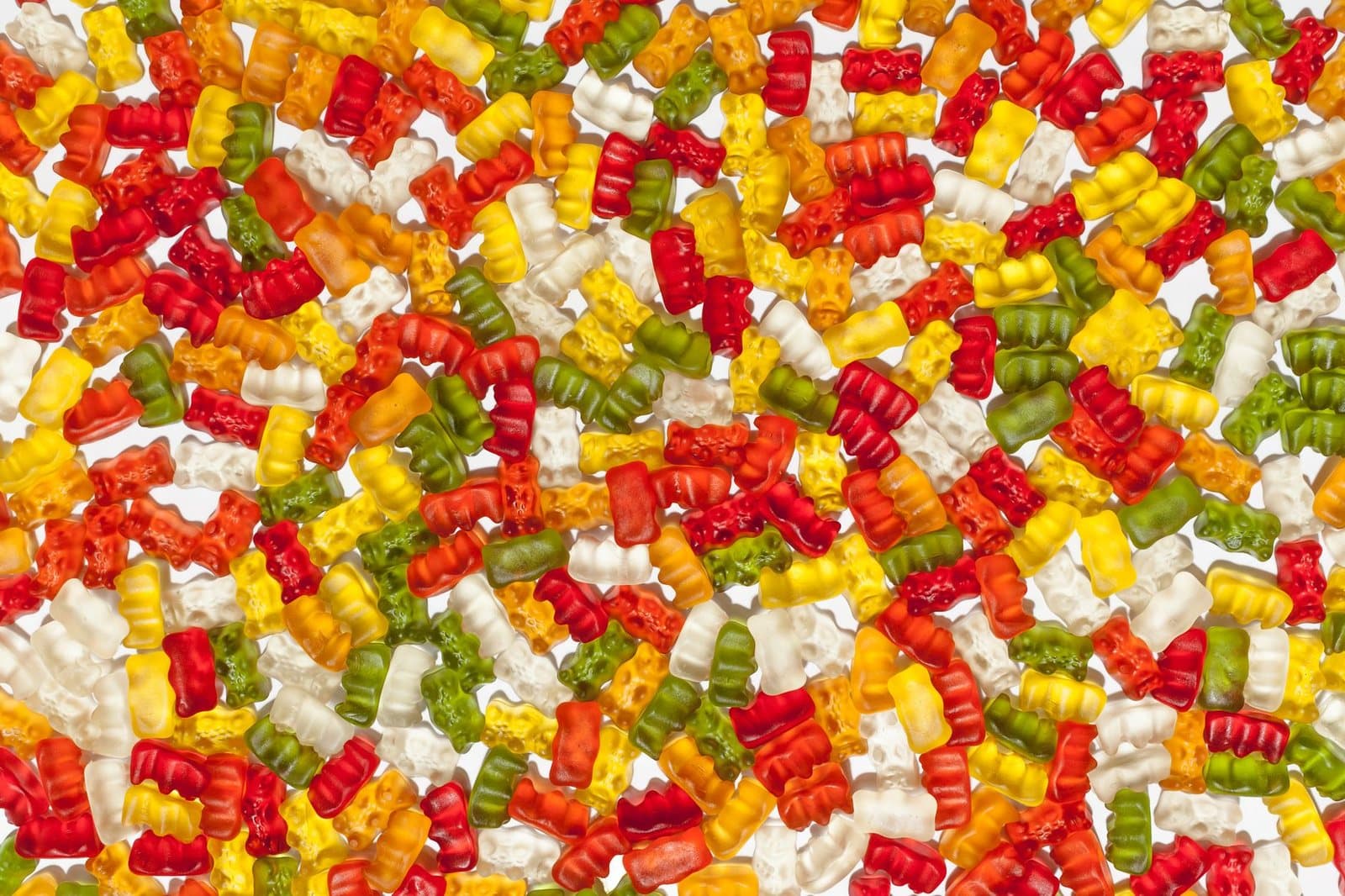
Silicone bear molds are inexpensive and widely available online. One batch typically makes around 100–150 bears depending on mold size. Store in an airtight container in the fridge — they’ll keep for about a week, if they last that long.
The shop-bought ones that started this
We try a lot of gummies. Most of them are fine and forgettable, and the good ones are almost always about texture rather than flavour.
That is the thing worth paying attention to before you make your own. Commercial gummies get their chew from a specific gelatin-to-liquid ratio, and if your homemade batch comes out closer to jelly than gummy, the fix is more gelatin, not longer chilling.
Homemade Gummy Bears
Ingredients
- 1/2 cup fruit juice any flavor we like apple, berry, or orange
- 3 tablespoons unflavored gelatin powder
- 2 tbsp honey or maple syrup adjust to taste
- 1/2 Juice of lemon optional, for brightness
Instructions
- In a small saucepan, sprinkle the gelatin over the fruit juice and lemon juice. Let it “bloom” (sit and thicken) for 5 minutes.
- Add the honey and warm over low heat, stirring gently until the gelatin fully dissolves (do not boil).
- Remove from heat and skim off any foam.
- Pour the mixture into gummy bear molds (or a small baking dish if you don't have molds, cut into squares later).
- Refrigerate for 1–2 hours until firm. Pop out of molds and enjoy!